In Japan, traffic accident caused by elder drivers is focused.
Japan is already an aged nation. Elder people are dominant in Japan society. On the other hand, the more getting older, the more our cognitive ability becomes worse. It is an inevitable nature.
Therefore, Japan government began to monitor elder driver's ability more strictly than the past. Elder people have to take a cognitive screening when renewing the driving licence. Persons failed to the test have to meet a doctor to prove they have still capacity of driving.
However, it is not easy to judge if a person can drive a car safely. Rather, we psychiatrists have not been trained to evaluate one's driving technique. It is a task of trainers in driving school.
Nonetheless, Japan government established a new scheme to demand psychiatrists to judge if a person, both elderly and mentally disordered, can drive the car. This policy does not make sense.
Recently, I heard some patients with mental disorder were requested repeatedly to submit a doctor's certification while renewal of the driving licence. It looks like a discrimination against disabled people.
In my opinion, giving a driving licence is an issue of the driving center. And if they cause a traffic accident, they should be responsible for the damage regardless of their mental status unless there are some exceptional reasons, since anyone must manage their state for safety driving once take a wheel.
Showing posts with label education. Show all posts
Showing posts with label education. Show all posts
Tuesday, March 3, 2020

Monday, February 18, 2019
International conference regarding risk assessment
Yesterday, I participated in an international conference as a chairman.
This conference was held at Chiba University. Its theme was risk assessment and management of offenders with mental disorders. A Dutch specialist was invited to provide a keynote speech regarding SAPROF. SAPROF is a structured assessment tool about protective factors of mentally disordered offenders. Also, some Japanese researchers made a presentation about their specialty and clinical practice.
I have learned SAPROF at when I belonged to King's College London a few years ago. I was impressed with its usability. You can find some strengths of the subject with SAPROF. Therefore, the outcome of SAPROF can be easily shared with the subject whereas telling the results of other risk assessment tools to the subject may be invasive. It is a uniqueness of SAPROF.
In the discussion, I tried to let the participants speak frankly about the challenges in this region. Risk assessment is bound by Cassandra's curse, as I mentioned in this blog previously. Thus, the outcome of exactly assessing risks is hardly approved by the public.
My past entry: Cassandra’s curse
Therefore, we should talk about this theme with a neutral and scientific attitude. Of course, the presenters clearly understood this point. But, non-specialists is difficult to accept this issue. We have to explain the importance and value of precise risk assessment and management.
Sunday, September 30, 2018
Sequels in September 2018
Saturday, September 22, 2018
Zaif was broken
Following the fraud case, Fisco decided to financially support Zaif. It seems to dominate Zaif on this occasion. On the other hand, Zaif has stopped allowing the new registration of customers.
Friday, September 21, 2018
Singularity will come sooner than you expect?
Just yesterday, I read a book in which the author claimed that singularity would not come within this century. There is a broad dispute regarding future prospecting.
Monday, September 10, 2018
Exam for licensed psychologist
I checked my answers in this exam. As far as my evaluation, I am sure that I will get the license.
Monday, September 10, 2018
Exam for licensed psychologist
Yesterday, I got an exam in Tokyo.

This exam was to get the license of psychologists.
So far, Japan had had no official license or certification of clinical psychologists. Many inofficial organizations have their legislation to certify the members as a professional psychologist. But people cannot distinguish which organization is trustworthy. Indeed, there are several groups which are far from sincere to grow up good psychologists.
At last, the government decided to create a new certification system for psychologists. The act of licensed psychologists came into force the previous year. And yesterday, the first examination for certification was conducted.
You have to get some academic degrees regarding psychology before taking the exam. But, medical practitioners, including psychologists and psychiatrists, who are currently working in a relevant region also take the exam. Therefore, I applied for the exam this year.
The exam was not so hard as I guessed before. You are given four hours to answer only 154 multiple-choice questions. Most of them are easy to answer for psychiatrists. I am sure to pass the exam.
Thursday, September 6, 2018
The process of accepting advice
The other day, I heard two episodes via the internet.
First, a person was asked by a younger colleague for advice. The colleague was going to marry a lady. He wanted to know how to get along with his new wife.

He recommended to the colleague to mitigate the burden of housekeeping. He recommended to buy a Rumba, equip a dish-washing machine on the kitchen. Any other ways to save time were proposed.
But, the colleague was not satisfied with his advice.
Second, a teacher was engaged in the English language. One Japanese student was learning English words. She did not know the word "foot."
Then, the teacher told her, "Have you heard the word football?"
"Yes, it's soccer," said she.
The teacher said, "So, is footwork?"
"Humm, I have heard it."
"So, would you guess the meaning of the word foot?"
However, the girl could not understand the meaning of the word "foot."
Some audience criticized the teacher's attitude, saying "the girl would have wanted to gain English skills effective to pass the exams. The act of the teacher was waste of time."
What is the common point of the two anecdotes?
In my opinion, any advice requires the preparation of the receiver to be effective.
I believe the first person told an important thing for the better life of the couple. Housekeeping is very tough for both wife and husband. Shortening the time for daily duty will make you happy. But, the colleague was not prepared for imagining the real life after the marriage. Therefore, he could not accept the advice as useful.
In the second episode, the teacher tried to teach the way of thinking to the student. It is quite important, but undervalued in Japan, I think. But, it is uncertain that all students are willing to learn how to think anytime. Especially, when the exam is approaching, most students want to the answer itself rather than the way to the answer, unfortunately.
We all make an advice to others. Regardless of the correctness, it would not be accepted in a bad occasion. We should be aware of it.
Wednesday, September 5, 2018
Korea bans coffee from school
Korean government decided to ban any coffee from school.
The Guardian: Caffeine hit: South Korea bans coffee from every school
In South Korea, any stores and vending machines and in the primary schools and junior high schools will refrain from selling coffee and caffeine-rich products by this September.

In Korea, many students are indulged in taking massive caffeine, according to the media. One of the reasons is to prepare for the examination. Also, some children like to play online games at midnight. The government seems to worry about the health risk due to excessive caffeine.
Indeed, caffeine's dependency and adverse effect on the sleep-wake cycle is often discussed just recently. Compared to the conventional theories, more researchers claim the harm of caffeine. Also in Japan, the first case of fatality because of taking massive caffeine was reported the last year.
However, I am doubtful that the Korean policy will successfully protect the health of students. After the regulation, coffee providers will deliver products with caffeine to students with other than the direct selling in school. And more importantly, students can get coffee as much as they want out of the school. Therefore, banning coffee in school will not be effective, I am afraid.
On the other hand, the effect of enlightenment for students with providing information that caffeine is not safe at all will be expected a little. This idea sounds odd, perhaps. But Japanese tend to consider that regulation makes people regulated through its spirit, not the rule itself. Korean resembles Japanese to some extent in their pattern of thought, I think.
Thursday, May 24, 2018
What is good parenting?
Nurture is one of the greatest activities of the human being. All we cannot grow up without any support of other people. Most of us have been grown up by the parents, while some need official or unofficial aid other than family for several reasons. Therefore, parenting is deemed as a simple and essential task for adult couples.

There are very scarce evidence regarding appropriate care for the children. Each parent has their own ideology. And many of us believe our idea is the absolute solution for guiding our children to good maturity. In reality, however, not a few parents fail to commit proper nurturing.
As a result, some children suffer from the traumatized experiences. Even if not physically abused, an inappropriate attitude of nurturing is suspected to be a risk for some mental disorders in later life. Not only PTSD and borderline personality disorder, but also bipolar disorder is relevant to the tough experiences in the youth, according to latest studies.
Therefore, we should know the right way to nurture which is evidence-based. A person's experience is limited because most parents can grow up
only some children.
On the other hand, it is no doubt that a clinical trial is difficult to be conducted in this region. Randomized nurturing is unrealistic. Results from animal experiments suggest very limited findings. And it takes many years to gain the outcome if a social experiment is started.
At present, there are some hypotheses regarding proper nurturing which are guessed with findings from other academic regions.
The Conversation: Evidence-based parenting: how to deal with aggression, tantrums and defiance
This article above introduces some techniques of appraisal and discipline to the children with problematic behaviors. I believe the author writes them with the principle of behavioral therapy. Behavioral therapy is rather a traditional technique, but even now widely used in several situations.
I think the behavioral therapeutic approach is beneficial for children since it is easy to understand and evidence-based. But the behavioral approach is not adequate for the perfect parenting, because children are not patients.
Tuesday, March 13, 2018
Korea bans an early exposure to English
Nowadays, English skills are essential for pursuing a better job for almost everyone. Therefore, how to learn the English language is a crucial issue for non-native speakers.

And there are many English teaching schools in those countries. In Japan, as well as some people consider to go to Philippine for entering an English school there, as well as domestic ways of learning English.
In Japan, elementary schools began to teach English several years ago. I was not taught English before entering a junior high school. Instead, I went to a private English school for a couple of years. But it was not effective for me to improve my English skills, to be honest.
Meanwhile, the South Korean government decided to ban English class from the first and second grade in the elementary school. The reason is early exposure to English class can get rid of proficiency of Korean language and culture, according to the media.
Aljazeera: South Korea bans English education for first and second graders
This issue is still under broad argument, as far as I know. Some people claim that acquiring the mother tongue at the early stage of life is indispensable for children to develop their brain and personality. According to them, bilingual is a myth, and learning two languages at the same time has adverse effects.
It sounds rational, considering the fact that I think everything in Japanese. If I had poor Japanese vocabulary, the ability of logical thinking and expression might be limited.
On the other hand, there are some people who use several languages without any troubles. We are jealous of them. And some parents want their children to be such a person. The result is early exposure because the learning speed in childhood is higher than that in adulthood.
When should we begin to learn the second language? This question is not easy to make a correct answer. Conducting a social experiment is not feasible. The figure in the future in Korea will be a proof of this issue.
Thursday, October 26, 2017
Children of same-sex couple perform as well
Researchers of child psychiatry examine the performance of children in several environments. Some are better than others in spite of the same gene. Most of the degree in cognitive function is genetically determined, but there are some rooms to be improved by several ways of training.
It is often said that children longitudinally exposed to an abuse and domestic violence are likely to become impaired in cognitive function. They mark inferior to other boys and girls. Some researchers claim the possibility that physical and psychological abuse can bring the onset of bipolar disorder.
As well, children in a divorced family are often deemed to be in a tough environment. But, the evidence is scarce to prove that divorce of the parents makes their children dull.

Then, how are the children of the same sex parents? A recent research has denied the difference in some domains of their lives. The researchers gathered several studies for three decades. They concluded that children of the same sex couple were as well as other children emotionally, socially, and educationally, as a result of the investigation of a total of 79 studies.
The Guardian: Children raised by same-sex parents do as well as their peers, study shows
It is a hopeful finding. But it is possible that there is a selection bias to draw this conclusion. Even if the research protocol is valid and fair, editors of most academic journals seem not to accept an article claiming children of a same-sex couple is inferior to others because this idea is potentially discriminating.
I believe children of a same-sex parent perform equally as other children if they are grown up in a proper environment. But it is not easy to prove this simple issue.
Tuesday, September 5, 2017
Banned sending children by car
Some British primary schools began to fine parents who send their children to the school by car.
International Business Times: Parents to be fined if they drop their children off at school by car
This new regulation was launched on Sep 4th, 2017 in Heavers Farm, on Dinsdale Gardens, and St Chads, on Alverston Gardens. Parents have been prohibited to take on/off their children in front of the school at the limited time. Breachers are going to be fined by 130 GBP.

This strange rule has some ends, according to the media. The schools to be subjected are located on a dead end. Thus, the first reason seems for safety, and avoiding traffic jam is also important.
However, it is described that encouraging pupils to walk to the school is another purpose. I am not sure this comment is rational. Some children have to go to school from distant place. In addition, British people are very sensitive to the security of their children, in my sense. Some parents worry about their kids kidnapped. Their attitude looks a little overprotective from Japanese. I am doubtful how many parents will adhere to this new regulation.
Saturday, June 17, 2017
Harm of social media: a study
In every era, a novel thing is subjected to criticism. And social media are not an exception.

A survey conducted by researchers at the University of Sheffield was published recently. According to them, social media such as Instagram, Twitter, and Facebook are harmful to youth's mental health.
The Guardian: Facebook and Twitter 'harm young people's mental health'
They examined several measures in thousands of participants. The result showed that social media users had less sleep and were more anxious. Girls also tended to have negative body image. They created a model formula to estimate the relationship between the time spent at social media and their life satisfaction. As a conclusion, some social media were harmful to the youth.
SSRN: Social Media Use and Children's Wellbeing
This paper is too difficult for me to examine its validity. Some economists were involved in this survey. On the other hand, psychiatric professionals were less engaged in this study. I think it is doubtful they could measure the participants' life satisfaction exactly.
In addition, there is a possibility of reverse causality. People who are indulged in social media tend to suffer from some kind of mental illness or dissatisfaction. Participants who use social media extremely much time can be addictive.
Indeed, some other researchers are doubtful to the validity of this study.
Furthermore, if social media is rather harmful to us, it is almost impossible to ban them from our daily life. Early exposure and education about how to treat them are essential.
Monday, June 12, 2017
Prospective students of Harvard dismissed due to the posts on Facebook
At least ten students got their permission to enter the class of Harvard in 2021 canceled. The reason was the contents they posted in a group chat on Facebook.
Independent: 10 students have Harvard acceptances withdrawn over Facebook memes
Members of the group created sexually or racially offensive description and graphics on the Facebook group. The Admission Committee of Harvard started to investigate what they had posted. After a deliberate investigation, at least ten prospected students were excluded from the list of 2021 class.

To begin with, I was a little surprised that the Harvard class in 2012 has been fixed now. I am not sure what the students posted exactly. Considering the fact that the dismissed students must be teens, the decision of the authority can be harsh. But, the issue of discrimination is very deep and serious. The seed of prejudice is born in the very early life stage. Harvard seemed not ignore their rude behavior.
Nonetheless, we have to reconsider how to treat the misconducts on the internet. Everyone have bitter memories they made a failure in the youth. However, what you have posted on the internet will last eternally. The right to be forgotten was discussed recently. We should be tolerant to misconducts in young people a little more.
Saturday, March 25, 2017
Scandal around Akie Abe, the Prime Minister's wife
Japan parliament is stormy because of a scandal of Abe Shinzo's wife.

Akie Abe, the wife of Shinzo Abe, the Prime Minister of Japan, is suspected to have been involved in a tricky discount in selling a public land to an educational corporation.
Moritomo Gakuen was planned to be established as a primary school belonging to an educational corporation.
The kindergarten operator testified to parliament that the first lady, Akie Abe, gave him an envelope containing 1m yen (£7,100) and said it was from Shinzo Abe. The government denies the claims.
Moritomo Gakuen group was planning to build a new elementary school in Osaka. Yasunori Kagoike, the president of the group, claims that Akie Abe was involved in the approval of the planning. He also stated that Akie had given him a million JPY as a secret donation. Akie denied his claim.
The Guardian: Shinzo Abe and wife accused of giving cash to ultra-nationalist school
The land on which the new elementary school would be built was sold from the government to the corporation for very low cost. The official said that it was because many wastes were buried in the land. But, there are unclear things around the contract of transferring the land.
Yasunori Kagoike was summoned to the Parliament to reply the questions of lawmakers. However, the gap of the speech between Kagoike and the Prime Minister's wife became widened. Opposing parties are keen to pursue the issue, because Shinzo Abe declared that if he were arbitrarily involved in the scandal, he would abandon the seat of the PM.
To be honest, I am indifferent to the fact about this scandal. It is not illegal for a politician to make a donation outside of his constituency. Cheating in selling public lands is, of course, problematic. But I do not think it is so critical.
Akie Abe is an active woman. She is not always on the side of Shinzo Abe, but she behaves based on her own opinion. In this sense, I admire her policy.
However, I do not like her ideology as a nationalist. It is true that Akie is inclined in the policy of Moritomo Gakuen. In the kindergarten administered by Moritomo, children are encouraged to admire Shinzo Abe. According to the media reports, even hate speeches against Korean people are heard in the kindergarten. If true, they are not education but brainwash.
Although the liberty of thoughts should be accepted, I am shameful that the wife of the Prime Minister approves such a nationalistic education. In this sense, I dislike Akie Abe.
Monday, February 20, 2017
A man with 15 academic degrees
Do you like to learn something? If so, is it a college for you to be most suitable?
Most students get an academic degree; bachelor, master, or Ph.D. at a college. And only a few people gain twice. But, there is a man who has a total of 15 degrees in Italy.

His name is Mr. Luciano Baietti. His specialty is various from sociology to military strategy. In the interview, he seems to be happy to learn many things he does not know. Now, being 70-year-old, he is going to learn food science.
Straitstimes.com: 70-year-old Italian man is world record holder with 15 degrees
Learning is fun. Although not the only choice, academia is a good place to learn something structurally. At this point, I am jealous of him.
On the other hand, I wonder how he is utilizing the knowledge and skills he got at the college. In my opinion, an opportunity to learn something valuable is not a privilege, but a gift. If I had been born in a developing country, I would not have been an associate professor. He was so lucky that he had enough time to learn for fun.
Of course, I believe he has given many valuable things to people around him through jobs and voluntary activities.
Another point of discussion is the value of an academic degree. Maybe it is strange for me to say this but, I think the authority of a college will be rapidly shrinking. A learning opportunity is provided to many people thanks to the spread of the internet. You need not enter a college when you find something you have to learn. In Japan, many students are aware of this fact. But young people are willing to go to college only because having a bachelor degree is advantageous for getting high salary. In the near future, there will be nobody willing to collect academic degrees for any reasons.
Wednesday, February 8, 2017
Overlearning is beneficial
You can often feel bored when taking a practice repeatedly. You may have a strong memory of spelling tests. Catch is one of the primary menus in baseball practice. Beginner Karate fighters have to mimic senior trainee's gesture again and again. Is it necessary to do such a simple task many times for the mastery?

The answer is yes, according to scientists. An experimental study suggests that "overlearning" has a preventive effect from forgetting the skill once you have acquired.
The Guardian: From ‘overlearning’ to going barefoot: how to learn better
Perhaps, there are some stages in your brain from the beginning to the mastery. The first stage is initial learning, or simply knowing the matter. You make a glance at the manual and recognize the manner of the skill. But this memory will vanish immediately because it is stored in the working memory. Through repeated practice, the instant memory is enhanced, to be changed into long-term memory. It means that you hardly forget the process of the skill. However, you may have difficulty to do the same thing in a different situation. The third stage is the generalization. You can utilize the manner you have acquired in another object, surrounding, and perspective.
And the final stage is overlearning. At this stage, the process of the skill is done at the unconsciousness level. Professional sports players often say, "My arms automatically catch the ball," or "I jumped up before I wanted to do so."
Once reached this stage, your skill never betrays you. Even if you are staying far from the field of the skill for a long time, you can remember the skill immediately when you need it.
Physician's skill is one of the examples. Elder physicians have many experiences of treating patients. Their observation and technique are overlearned to their body and mind. Therefore, they can behave as if a skillful doctor, even with dementia. Indeed, it is difficult to detect mild dementia among doctors.
Driving technique is also overlearned in many people. In Japan, traffic accidents caused by elder people is sometimes reported recently. But the percentage of the cases is far fewer than expected, considering the high prevalence rate of dementia in aged people.
In conclusion, overlearning is beneficial, at least in some kind of fundamental skills for you.
Saturday, November 26, 2016
Is Santa lie acceptable?
Do you believe Santa Clause is delivering toys to children on the Christmas Eve? Of course not. So, why do you tell a lie to your kids?

It is a question which is old, but still hard to reply. Indeed, many parents seem to trick their kids to make them believe the existence of Santa Clause, although it is obvious one day the children will know that they had been deceived by the parents for a long time.
Christopher Boyle and Kathy McKay suggest that it is because parents would like to become children accepted to believe the fantasy. According to them, Santa lie is not a white lie, but merely a selfish trick.
International Business Times: A wonderful lie - Here's why telling kids Santa is real is not such a good idea
In the article published in Lancet Psychiatry, they take a warning that such a lie can do damage on their children’s mind later in their life. Unfortunately, I cannot read the whole article now. Therefore, I do not know how they justified their hypothesis.
Lancet Psychiatry: A wonderful lie
But I am doubtful that their opinion was properly constructed through a scientific process. The influence of an experience in later life is quite difficult to be proven. In this case, I should conduct a longitudinal cohort study whose subjects are at least hundreds of children in each group, of which guys having told, or untold, about Santa by their parents, are participated. It is an absurdly large study protocol.
In Japan, Santa fantasy is also popular albeit not so many Japanese are Christians. I think some parents are eager to trick their children because other families do the same. They tend to think their child will be bullied if their he or she is the only one in the class who does not believe Santa. Such an idea is particular in Japan, in my sense. I am curious how European people feel about it.
And in my opinion, telling about Santa is neither beneficial nor harmful to children. Sooner or later, children learn the fact that, every people make a lie, and their parents are no exception.
Wednesday, September 7, 2016
Divide of education among coutries
The modern world has several divides among people. Recently, “digital divide” has been focused in the context of the highly mechanized society. But, the most fundamental divide is the divide of education, so far and to be.

Even now, many children cannot receive primary education in the world. As they cannot achieve literacy, they will not get an opportunity to improve their skills and knowledge, resulting in making them remain in the poverty. And their children will also be not able to have a learning opportunity. Thus, the divide of education is to be inheriting.
According to a Unesco’s report, the minority of the countries participated in its survey met the criteria in which minimum requirement for primary education. Many developing countries will hardly achieve the goal until the end of the next decade. Furthermore, it is expected to be difficult that all countries will reach the goal even in 2100.
The Guardian: Poorest countries hit hardest as world lags behind on global education goals
Now, teachers in many countries are struggling with a shortage of resource in the education environment. The Indian government is eager to invest more budget in education. However, there are urgent needs to fix stuff in the school and hire more teachers. Many other countries have no enough money to spend on improving education level.
Hindustan Times: Overcrowded classrooms to dirty toilets: Delhi govt schools need urgent fixing
In Japan and other developed countries, the issue of education still exists. But the subject is not to give primary education to all children, but how to find and grow extraordinary talents in citizens. There are several competitive funds in such countries. Many college students are applying them, but not a few students are suffering to the debt afterward. It means education funding does not work well. In other words, higher education does not guarantee higher income.
Especially in Japan, the government has been keen to continue the bottom-up strategy. The literacy rate in Japan is the world best, and 97% of children can enter a high school. On the other hand, genius children seem not to be properly treated. Most of them are forced to adhere the standard curriculum regardless of their understanding. They feel bored and lose the motivation to learn. Some of them have a particular disadvantage in learning, such as in sport. But they cannot avoid any curriculum, and sometimes are bullied by other children.
In my opinion, there is a difference in optimal strategy according to the development level in each country. Japan should prioritize the education for gifted children than improving the quality of primary education, even if it is also important. At the same time, developed countries have to continue the aid by skills and money to enhance the education level in developing countries.
Thursday, August 25, 2016
Gender difference in circadian rhythm?
Which is the better learner in school, men or women has been discussed for many years, mostly to lead to a dysfunctional argument.
In real, it seems that girls are more adaptive and good students. They have better marks in school than boys. Nowadays, women are more likely to go to university than men in some developed countries.
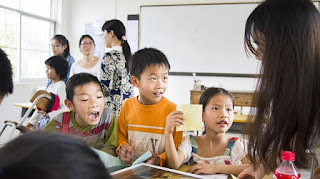
These facts do not mean that women are better at school learning. In elementary school ages, girls grow up faster than boys. Therefore, they become more serious to commit the class, and can learn more things at the class. On the other hand, the higher rate of entering university in women may suggest the difficulty to get a job. Perhaps, women need a higher grade of education to earn the same money as men.
Recently, another hypothesis was suggested. According to economists at the University of California, women are productive than men on the morning. They conducted an experiment in which students began a class on the afternoon instead of the morning. Then, boys showed higher performance, whereas girls had no changes. It means that boys cannot adapt the early morning class. The researchers concluded that men's circadian rhythm is longer than women's, and therefore women are resistant to sleep deprivation.
Independent: Girls do better than boys at school because they’re morning people, study suggests
This is an interesting experiment. The result is consistent with my personal experience. Boys are likely to be late for school despite some girls are suffering from hypotension. And women seems less likely to get a jet rug.
However, it is not sure that women are proven to be morning people. It is possible that women have a better ability to adapt a new environment than men. It may be difficult to be accustomed to the class whose opening time is altered every month. To testify the difference in circadian rhythm, "alone in the cave" experiment is preferable, besides the ethical issue.
Finally, gender difference is not so eminent compared with the interpersonal difference, in my opinion. The personalized curriculum is profitable rather than gender specific programs.
In real, it seems that girls are more adaptive and good students. They have better marks in school than boys. Nowadays, women are more likely to go to university than men in some developed countries.

These facts do not mean that women are better at school learning. In elementary school ages, girls grow up faster than boys. Therefore, they become more serious to commit the class, and can learn more things at the class. On the other hand, the higher rate of entering university in women may suggest the difficulty to get a job. Perhaps, women need a higher grade of education to earn the same money as men.
Recently, another hypothesis was suggested. According to economists at the University of California, women are productive than men on the morning. They conducted an experiment in which students began a class on the afternoon instead of the morning. Then, boys showed higher performance, whereas girls had no changes. It means that boys cannot adapt the early morning class. The researchers concluded that men's circadian rhythm is longer than women's, and therefore women are resistant to sleep deprivation.
Independent: Girls do better than boys at school because they’re morning people, study suggests
This is an interesting experiment. The result is consistent with my personal experience. Boys are likely to be late for school despite some girls are suffering from hypotension. And women seems less likely to get a jet rug.
However, it is not sure that women are proven to be morning people. It is possible that women have a better ability to adapt a new environment than men. It may be difficult to be accustomed to the class whose opening time is altered every month. To testify the difference in circadian rhythm, "alone in the cave" experiment is preferable, besides the ethical issue.
Finally, gender difference is not so eminent compared with the interpersonal difference, in my opinion. The personalized curriculum is profitable rather than gender specific programs.
Thursday, July 21, 2016
Competition in school age
We sometimes compare ourselves to others. Occasionally we feel superior to a neighbor, and often jealous to another. Being competitive is inevitable, isn’t it? It is one of the substantial questions in human society.

Even if it is admitted, some people dislike making children act competitively. In school, pupils are encouraged to participate in sports and other competitive events. Some children seem not willing to defeat classmates.
The Guardian: So who says competition in the classroom is inevitable?
Alfie Kohn is one of the researchers who have a sceptic stance to the competitive way of education. He described in his book that we compete just because we were taught to do so. He also claims that contextual thought is essential in teaching place, criticizing presenting knowledge simply.
Wikipedia: Alfie Kohn
Indeed, competitive way of teaching is recently doubtfully argued. Traditionally, the competition was deemed as the most constructive way for maximizing performance. However, some recent studies suggested that people in competitive environment tended to be keen to be shortsighted, and they are never motivated to work in a longitudinal way. Instead, workers in corroborative atmosphere became honest, and achieved the best performance at last.
Acknowledging this fact, it seems no use to encourage competition excessively. However, human, as well as other mammals are very sensitive to be fair. A monkey in an experimental setting gets anger when he feels being discriminated rather than being simply abused. It suggests that we strongly expect we should be all equal. This equality never means that we hope to be equally treated finally, but equally, have a chance to be fairly treated. We tend to consider efforts should be rewarded.
Considering it, the absolute equality cannot be achieved. The history of many communist nations suggests the difficulty of providing equality. Therefore, I believe competition is inevitable in our society to some extent. In school, competition will raise children’s performance. The issue is competition itself is not the goal at all.
Thursday, January 21, 2016
Cameron wants Muslims to speak English
David Cameron, the Prime Minister in Britain, criticized some Muslim communities in the UK as keeping women discriminating culture. He declared that British people including Muslim should be free from gender inequality.

Furthermore, he mentioned essential English skills for immigrants. He raised the prospect that people failed to pass the examination of English language would be banned from the UK.
International Business Times: Muslim women in the UK 'must integrate and speak English' says David Cameron
This examination will be applied to other non-EU migrants. Even migrant spouses will have to improve their English skills. Otherwise, they will not be able to remain in Britain.
Hindustan Times: New UK English test may hit spouses of Indian migrants
Cameron considers the fact a lot of Muslim women cannot speak English as a cause of their economical inactivity. He will offer an opportunity to learn English using official funds. As expected, however, his statement ignited a criticism.
I think there are two different issues to be discussed. First, a considerable amount of English people cannot understand English. It leads to some troubles in the society potentially. Providing adequate education will be a resolution. But, it does not mean the banning of immigrants who failed to pass the exams. Learning ability is various among persons. What the people with learning difficulty require are more time and another opportunity. Sending any people who failed to their native countries is unrealistic.
On the other hand, the cultural discrepancy is more complicated matter. Each culture should be respected as a principle. But it is understandable that Cameron does not want women in the UK being discriminated. Some legislation will be needed, in my opinion, to guarantee Muslim women to choose their own lives, regardless of their religion.
Subscribe to:
Posts (Atom)